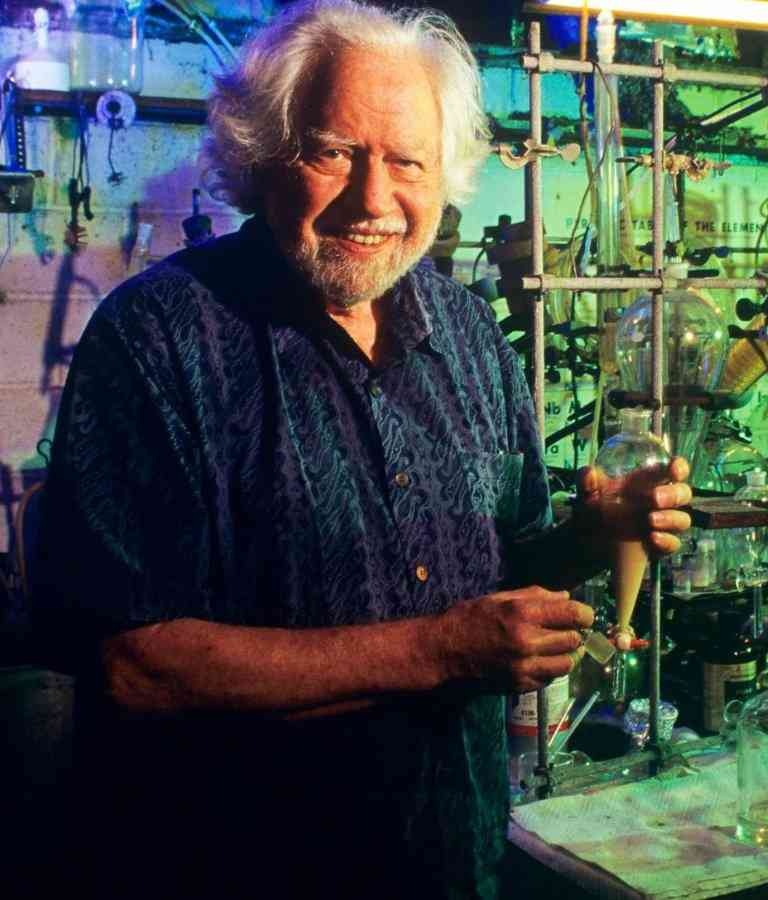
Alexander "Sasha" Shulgin stands as one of the most extraordinary and paradoxical figures of twentieth-century science: a rigorous biochemist who synthesized hundreds of novel psychoactive compounds in a backyard laboratory, a government consultant who held a DEA license to study Schedule I substances, and a fearless explorer who treated his own nervous system as the ultimate instrument for understanding the human mind.
Often called the "Godfather of Ecstasy" for reintroducing MDMA to the world, Shulgin was far more than that label suggests. He was a bridge between ancient shamanic traditions and modern pharmacology, a pioneer whose meticulous work has helped spark today's psychedelic renaissance in medicine and consciousness research.
From an unassuming 200-square-foot laboratory in Lafayette, California—a modest shed among the redwoods—Shulgin created and tested over 230 novel psychoactive compounds. Each one was first tested on himself. This wasn't recklessness; it was the scientific method taken to its logical conclusion by a man who believed that consciousness itself was the final frontier, and that direct experience was the only honest path to understanding.
The Mind's Odd Strength: Early Life and Awakening
Born on June 17, 1925, in Berkeley, California, to Theodore Shulgin—a Russian immigrant schoolteacher—and Henrietta, an American educator, young Alexander grew up in an intellectually vibrant household. His gifts were apparent early: he entered Harvard University at just sixteen on a full scholarship, studying organic chemistry with the precocious intensity that would characterize his entire life.
But Harvard couldn't hold him. In his second year, with World War II raging, Shulgin dropped out to enlist in the U.S. Navy. It was aboard the USS Pope that he experienced something that would shape his understanding of consciousness forever.
"Before thumb surgery, a nurse offered me a glass of orange juice with something at the bottom. I assumed it was a sedative and passed out immediately. Later I learned the crystals were just undissolved sugar. The entire experience had been in my mind. It was a tantalizing hint of the mind's odd strength—its ability to create reality from belief alone." — Alexander Shulgin
This placebo experience planted a seed that would take years to flower. The young sailor had glimpsed something profound: that the boundary between chemistry and consciousness was far more permeable than materialist science suggested.
After the war, Shulgin returned to California with renewed purpose. He completed his undergraduate degree at Berkeley, earned a Ph.D. in biochemistry in 1955 (his thesis focused on isotopically labeled amino acids), and went on to postdoctoral work in psychiatry and pharmacology at UCSF. A brief stint as research director at Bio-Rad Laboratories preceded what would become the transformative period of his early career: his years at Dow Chemical.
The Dow Years and the Mescaline Revelation
At Dow, Shulgin proved his commercial value quickly. He invented mexacarbate (marketed as Zectran), the world's first biodegradable pesticide—a genuine innovation that earned Dow millions and, more importantly for Shulgin, earned him something rare in corporate research: freedom. Dow essentially told him to pursue whatever interested him.
What interested him was the human mind.
In 1960, Shulgin obtained 400 milligrams of mescaline—the psychoactive compound found in peyote cactus, first isolated in 1897 and famously described by Aldous Huxley in The Doors of Perception. Under the watchful presence of friends, Shulgin consumed it.
The experience shattered and rebuilt his worldview:
"I saw hundreds of nuances of color that I had never seen before. The world was not simply beautiful—it was transformed. But more than the visuals, I learned something fundamental: that there was a great deal inside me that I had no idea existed. I understood that our entire universe is contained in the mind and the spirit. We may choose not to find access to it, we may even deny its existence, but it is indeed there inside us, and there are chemicals that can catalyze its availability." — Alexander Shulgin, on his first mescaline experience
That single afternoon redirected the entire trajectory of his life. Here was a scientist who had spent years studying the chemistry of life, suddenly confronted with the chemistry of experience—with molecules that could unlock doors he hadn't known existed in his own psyche.
From that moment forward, Shulgin began synthesizing analogs of mescaline and other phenethylamines. His approach was methodical: begin with tiny doses, escalate slowly, document everything with chemical precision and subjective honesty. He developed what would become known as the Shulgin Rating Scale to quantify effects with scientific rigor.
The plus-four experience, Shulgin emphasized, was not about dose or intensity. It was about quality—those rare moments when the veil thins and something profound becomes available. "If a drug were ever discovered that would consistently produce a plus-four experience," he wrote, "it would be called the Philosopher's Stone." No such substance exists. The plus-four depends as much on the person, the setting, and the readiness of the psyche as on any molecule.
The Farm: Laboratory of the Mind
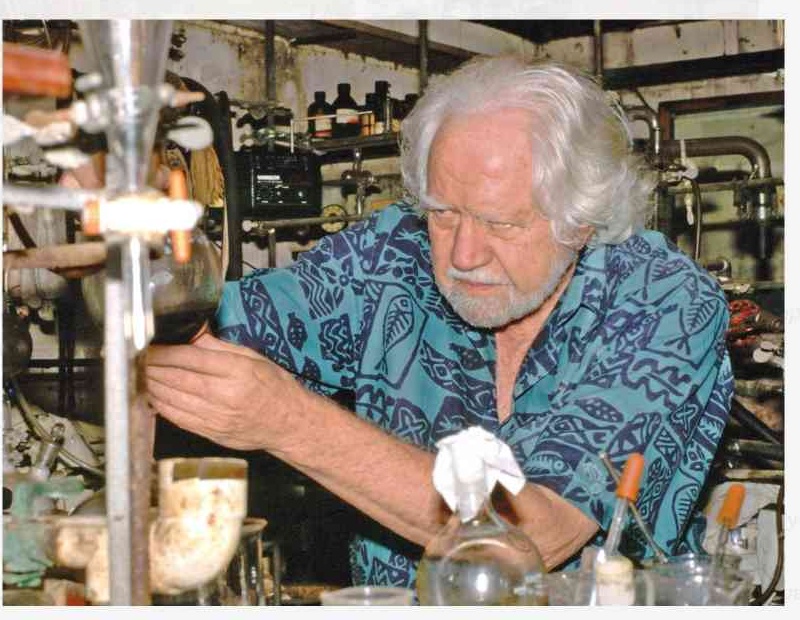
In 1966, seeking independence from corporate constraints, Shulgin left Dow Chemical. He purchased a modest property in Lafayette, California—about 22 miles east of San Francisco—that would become legendary in psychedelic history: the Shulgin Farm.
The "farm" was less bucolic estate than research compound. At its heart stood a 200-square-foot laboratory shed, weathered and unassuming, where Shulgin would spend the next half-century creating molecular keys to inner worlds. Outside, cactus gardens (including San Pedro and other mescaline-containing species) dotted the grounds. Inside, glass beakers, reaction vessels, and analytical equipment filled every surface.
Shulgin supported himself through consulting work, expert witness testimony, and teaching public health courses. He held a DEA Schedule I license—rare permission to synthesize and possess otherwise illegal substances for research purposes. This allowed him to operate in a gray zone that few scientists could access: legal permission to create and study compounds that most researchers could only read about.
His methodology was radical yet disciplined:
The Shulgin Method
- Start micro: Begin with doses far below expected threshold—1mg, 2mg—to test for allergic reactions or unexpected toxicity
- Escalate slowly: Increase dose incrementally over days or weeks, never rushing to experience
- Self-test first: The chemist takes the first risk, always
- Document everything: Detailed notes on timing, effects, duration, aftereffects
- Research group validation: Once safety is established, trusted colleagues confirm and expand observations
- Chemical precision: Every compound characterized by melting point, spectral data, synthesis route
Over the course of five decades, Shulgin synthesized and personally bioassayed well over 230 novel psychoactive compounds. The number is staggering—more new psychoactive molecules than any other individual in history. He estimated he had taken psychedelics over 4,000 times.
MDMA: The Rediscovery That Changed Everything
Of all Shulgin's contributions, none has had greater cultural and medical impact than his rediscovery of MDMA.
The compound had been first synthesized by Merck in 1912 as a mere chemical intermediate in the production of a blood-clotting agent. It was patented, filed away, and forgotten for over sixty years. No one at Merck ever tested it on a human being. Its psychoactive properties remained unknown.
In 1976, a graduate student described to Shulgin a compound he'd heard about—methylenedioxymethamphetamine. Intrigued, Shulgin located the original Merck patent, synthesized it on September 12, 1976, and cautiously tested 81 milligrams on himself.
The result was unlike anything he'd experienced with classic psychedelics:
"I feel absolutely clean inside, and there is nothing but pure euphoria. I have never felt so great, or believed this to be possible. The cleanliness, clarity, and marvelous feeling of solid inner strength continued throughout the rest of the day, and evening, and through the next day. I am overcome by the profundity of the experience." — Alexander Shulgin, MDMA journal entry, 1976
What distinguished MDMA was its unique pharmacological profile. Unlike LSD or mescaline, it produced no visual disturbances at therapeutic doses. Instead, it created a state of remarkable emotional clarity, empathy, and openness—what Shulgin called "an incredible tool for communication."
Recognizing its potential for psychotherapy, Shulgin introduced MDMA to his friend Leo Zeff, a semi-retired psychologist. Zeff was so moved by the experience that he came out of retirement, training over a hundred therapists in MDMA-assisted techniques. By the late 1970s, a quiet revolution was underway in underground therapeutic circles.
The compound spread. Therapists found that patients who had been stuck for years could achieve breakthroughs in single sessions. Trauma that had resisted traditional talk therapy became accessible. Couples on the brink of divorce discovered renewed connection.
But MDMA couldn't stay underground. By the early 1980s, it had leaked into recreational use—branded as "Ecstasy" and sold openly in Dallas nightclubs. The DEA moved to emergency-schedule the substance in 1985, despite testimony from therapists about its clinical value.
Shulgin testified at the scheduling hearings. "I believe MDMA has legitimate therapeutic applications," he told the administrative law judge. "It is a loss to psychology and to psychiatry that it will no longer be easily available." His testimony was acknowledged but ultimately ineffective against the tide of drug war politics.
"Use them with care, and use them with respect as to the transformations they can achieve, and you have an inexhaustible resource for exploration."
The Magical Half-Dozen
Of the hundreds of compounds Shulgin created, he identified six phenethylamines as his most important discoveries—what he called the "magical half-dozen":
Mescaline
The natural prototype. Found in peyote and San Pedro cactus. Sacred to indigenous peoples for millennia. The compound that started Shulgin's journey.
DOM (STP)
A powerful, long-lasting psychedelic. 10-20 hour duration. Requires great respect and proper setting.
2C-B
Shulgin's personal favorite. "One of the most graceful, erotic, sensual, introspective compounds I have ever invented." Described as offering "a luxury of sensory enhancement with a minimum of introspective demands."
2C-E
Deeply analytical and introspective. Known for emotional depth and philosophical contemplation.
2C-T-2
Warm, euphoric, visually rich. Often described as "comfortable" and therapeutically valuable.
2C-T-7
"If all the phenethylamines were to be ranked as to their acceptability and intrinsic richness, 2C-T-7 would be right up there near the top."
Beyond the magical half-dozen, Shulgin's catalog includes the entire 2C family (2C-I, 2C-C, dozens more), the DOx series (DOI, DOB, DOC), and numerous tryptamines explored in his second major work. Each compound a different lens, a different doorway, a different set of questions about the nature of consciousness.
Ann Shulgin: The Alchemical Marriage
In 1979, Shulgin met Ann Gotlieb, a lay therapist introduced to him by Leo Zeff. She had been trained in using psychedelics therapeutically and had developed deep expertise in guiding others through transformative experiences. They married in 1981 in a ceremony in their backyard at the Farm.
What followed was one of the most remarkable intellectual and romantic partnerships in the history of consciousness research. Sasha brought the chemistry—the synthesis, the molecular architecture, the precision of structure-activity relationships. Ann brought the psychology—the understanding of set and setting, the skill to navigate difficult experiences, the wisdom to integrate insights.
Ann was not a professionally licensed psychotherapist, but she called herself a "lay therapist" and was universally regarded as possessing extraordinary gifts for psychological work. People came from around the world to sit with her. She created a safe container where the work of these molecules could unfold.
"She was always the one who people wanted to talk to," her daughter Wendy Tucker later recalled. "You always felt like you could open up to her."
Together, Sasha and Ann tested every compound. For over three decades, they explored consciousness as a team—the chemist and the guide, the scientist and the healer. Their research group, which met regularly at the Farm, became legendary in psychedelic circles: a small community of trusted explorers pushing the boundaries of inner experience with rigor and care.
PiHKAL and TiHKAL: Love Stories Written in Molecules
In 1991, Sasha and Ann self-published a book that would become sacred text for a generation of psychonauts: PiHKAL: Phenethylamines I Have Known and Loved.
The title itself was revolutionary—a love story written in molecules. The 978-page volume was structured in two halves. Part One, "The Love Story," is a fictionalized autobiography tracing Sasha and Ann's meeting, courtship, and decades of shared exploration. Part Two is something never before published: detailed synthesis procedures, dosage ranges, duration curves, and trip reports for 179 phenethylamine compounds.
It was simultaneously a memoir, a chemistry textbook, a phenomenological catalog, and a manifesto for cognitive liberty.
"Funny, I'd forgotten that what comes to you when you take a psychedelic is not always a revelation of something new and startling; you're more liable to find yourself reminded of simple things you know and forgot you knew—seeing them freshly—old, basic truths that long ago became clichés, so you stopped paying attention to them." — Alexander Shulgin, PiHKAL
Six years later came TiHKAL: Tryptamines I Have Known and Loved (1997), covering the tryptamine family—DMT, psilocybin analogs, and dozens of novel compounds. Together, the two books document over 250 psychoactive substances, most created by Shulgin himself.
The books' publication had immediate consequences. The DEA, which had tolerated Shulgin's research for decades, raided the Farm in 1994. They revoked his Schedule I license and fined him $25,000, characterizing PiHKAL as "a cookbook for illegal drugs."
Shulgin's response was characteristically philosophical. He had operated legally for years—these compounds weren't scheduled when he created them, and his license permitted their synthesis. He had even trained DEA agents and served as an expert witness for the government. But he understood the political reality: once the information was public, once anyone could potentially synthesize these substances, the authorities could no longer allow his work to continue.
He never stopped working. Without the DEA license, he simply shifted to compounds that weren't scheduled—continuing to explore, continuing to document, continuing to push boundaries into his eighties.
Philosophy of the Inner Voyage
What set Shulgin apart from other psychedelic researchers wasn't just his chemical productivity—it was his philosophical framework for understanding what these experiences meant.
He rejected both the reductive materialism that saw psychedelics as mere chemical disruptions of normal brain function and the uncritical mysticism that attributed every vision to contact with external spiritual entities. His view was more subtle:
"There is a wealth of information built into us... tucked away in the genetic material in every one of our cells. Without some means of access, there is no way even to begin to guess at the extent and quality of what is there. The psychedelic drugs allow exploration of this interior world, and insights into its nature." — Alexander Shulgin
For Shulgin, psychedelics were tools—not for contacting external realms, but for exploring the vast internal landscape that each human being carries. The universe "contained in the mind and the spirit" wasn't metaphorical. He believed that consciousness itself was a frontier as vast as outer space, and that chemistry provided the vessels for exploring it.
He was also deeply committed to cognitive liberty—the right of individuals to explore their own consciousness:
"A society of free people will always have crime, violence, and social disruption. It will never be completely safe. The alternative is a police state. A police state can give you safe streets, but only at the price of your human spirit." — Alexander Shulgin
This wasn't libertine hedonism. Shulgin was meticulous about safety, about proper dosing, about the importance of set and setting. But he believed that informed adults had the fundamental right to explore their own minds—that this was, in fact, the most basic freedom of all.
"They might be drugs that alter the states of consciousness, or they might be states of transcendence reached in meditation. All of these are treasures of the spirit that allow exploration along paths which are undefined and completely individual."
The Final Years
Age eventually caught up with Shulgin's tireless body, if never his curious mind. In 2008, he underwent aortic valve replacement surgery. In 2010, he suffered a stroke that affected his memory. More strokes followed. He was diagnosed with progressive dementia—cruelly ironic for a man who had spent his life exploring the mind's frontiers.
According to some accounts, he experimented with a novel compound developed by Albert Hofmann (the discoverer of LSD) to treat his cognitive decline. Whether this helped remains unknown, but it was characteristic of Shulgin to meet even dementia as another territory to explore.
In 2014, liver cancer was diagnosed. On June 2, 2014—at five o'clock in the afternoon—Alexander Shulgin died peacefully at home at the Farm, surrounded by loved ones and Buddhist meditation music. He was 88 years old.
Ann continued his legacy, giving interviews and presentations until her own death in July 2022 at age 91. The Farm remains preserved by the Shulgin Foundation, which maintains Sasha's laboratory and archives his extensive research notes for future scientists.
Legacy: From Backyard Lab to Global Renaissance
Alexander Shulgin's impact is difficult to overstate. Consider:
By the Numbers
- 230+ novel psychoactive compounds synthesized
- 4,000+ self-documented psychedelic experiences
- 50+ years of continuous research
- 2 landmark books documenting his life's work
- 6 "magical half-dozen" compounds deemed most significant
- Countless researchers, therapists, and explorers influenced
His rediscovery of MDMA directly led to today's psychedelic therapy renaissance. Though the FDA declined approval for MDMA-assisted therapy in 2024 (citing study design concerns rather than efficacy questions), the research continues. Multiple clinical trials have demonstrated remarkable results for treatment-resistant PTSD, and regulatory approval in some form appears inevitable.
Dozens of Shulgin's other compounds are now being studied for depression, addiction, end-of-life anxiety, and other conditions. His meticulous documentation—those synthesis routes and experience reports in PiHKAL and TiHKAL—provides the foundation for research that would otherwise have to start from scratch.
Beyond specific molecules, Shulgin modeled something essential: that consciousness research could be rigorous without being reductive, that subjective experience could be documented with scientific precision, that the exploration of inner worlds was a legitimate scientific endeavor.
Organizations like MAPS (the Multidisciplinary Association for Psychedelic Studies), the Shulgin Foundation, and dozens of research labs around the world continue building on his foundation. The underground therapeutic communities he helped birth in the 1970s have emerged into mainstream medical acceptance. The molecules he created continue to reveal new therapeutic applications.
The Cosmos Within
When asked what his favorite drug was, Shulgin gave an unexpected answer: "A nice, moderately expensive Zinfandel."
The quip was characteristic—Shulgin's humor, his refusal to be pigeonholed as a drug guru, his insistence that he was a scientist first. But it also contained a deeper truth. For Shulgin, the molecules were never the point. They were tools, keys, catalysts. The point was the exploration itself—the vast inner cosmos that each human being carries, mostly unexplored, mostly unacknowledged.
"Our entire universe is contained in the mind and the spirit. We may choose not to find access to it, we may even deny its existence, but it is indeed there inside us." — Alexander Shulgin
Shulgin spent his life proving this wasn't merely poetic language. Through rigorous chemistry and fearless self-experimentation, he mapped territories of human experience that had previously existed only in mystical literature or shamanic tradition. He brought the scientific method to inner space.
In the end, Alexander Shulgin didn't just synthesize chemicals. He synthesized possibility—reminding us that the most profound discoveries often begin with a single courageous question:
What else is inside me?
The journey he started—into the vast inner cosmos each of us carries—continues. And thanks to him, we now have far better compasses.
"Molecules have no morals; only people do." — Alexander Shulgin
In the end, Alexander Shulgin didn't just synthesize chemicals.
He synthesized possibility.